



 closure


The Institute for Financial Research at The Hong Kong University of Science and Technology (HKUST) and the Institute for Global Common Development at Tsinghua University jointly hosted the Hong Kong Financial Market Development Forum, bringing together leaders and experts from government, business, and academia to explore Hong Kong’s opportunities and prospects under the new global circumstances. At the forum, the two institutions also launched a collaborative research initiative titled “Challenges and Opportunities in the Development of Hong Kong’s Financial Market,” aimed at providing robust theoretical foundations and policy recommendations for Hong Kong’s financial market development. The project seeks to build an efficient bridge for dialogue between policymakers and market participants, support Hong Kong in consolidating and enhancing its position as an international financial centre, attract global capital and institutions, and contribute strategically to China’s financial opening and the building of a strong financial nation.
Amid evolving geopolitical dynamics and increasing international complexity, Hong Kong’s financial market faces both opportunities and challenges. The forum featured in-depth discussions among policymakers, regulators, industry leaders, and scholars. Keynote speeches were delivered by Mr. Qi Bin, Deputy Director of the Liaison Office of the Central People’s Government in the Hong Kong SAR; Mr. Tim Lui, Chairman of the Securities and Futures Commission; and Mr. Li Jiange, Chairman of the Sun Yefang Economic Science Foundation.
The first roundtable discussion focused on attracting more high-quality companies to list and raise capital in Hong Kong, moderated by Professor KC Chan, Chairman of WeLab Bank, former Secretary for Financial Services and the Treasury, and former Dean of HKUST Business School. Speakers included Mr. Charles Li Xiaojia, Founder of Micro Connect and Chairman of Micro Connect Macao Financial Assets Exchange; Mr. Shen Peng, Founder of Waterdrop Inc.; Mr. Li Chunbo, Executive Committee Member of CITIC Securities and Chairman and CEO of CLSA; and Mr. Loong Chee Yeong, Chief Executive Officer of Deutsche Bank Hong Kong and Chairman of Deutsche Bank’s Asia Investment Banking Division.
The second roundtable discussion explored how to attract a more diversified investor base to participate in Hong Kong’s financial markets, moderated by Professor Yu Jianfeng, Professor of Finance and Associate Dean of the FinTech Research Institute at Tsinghua PBC School of Finance. Speakers included Mr. Huang Haizhou, Member of the Monetary Policy Committee of the People’s Bank of China and former Managing Director of CICC; Mr. Xu Jingwei, Managing Director and Head of Global Listing Services at Hong Kong Exchanges and Clearing Limited (HKEX); Ms. Joyce Chu, Managing Partner and Chief Investment Officer of Nan Fung Group Asset Management; and Dr. Zhang Anyuan, Chief Economist of Sequoia China.
Representatives from both institutions also addressed the forum, including Professor Guo Yike, Provost of HKUST; Professor Bai Chong’en, Dean of the School of Economics and Management and Dean of the Institute for Global Common Development at Tsinghua University; Professor Lou Dong, Dean of the HKUST Institute for Financial Research and Associate Dean of HKUST Business School; and Professor Jin Keyu, Director of the Centre for Geoeconomics at the HKUST Institute for Financial Research.
Professor Guo Yike, Provost of HKUST, remarked:
“Hong Kong is accelerating toward becoming a centre of technology and finance. With the return of Mainland enterprises and the rise of new technology companies, Hong Kong is poised to become a premier global listing venue for high-tech firms—empowering technological innovation through capital and leading the next wave of the digital economy.”
Professor Bai Chong’en, Dean of Tsinghua University School of Economics and Management and the Institute for Global Common Development, stated:
“Hong Kong and the Mainland have complementary strengths in their financial systems. Hong Kong should leverage its international and market-oriented advantages to align precisely with the country’s financial strategic needs. In areas such as RMB internationalization and capital account liberalization, Hong Kong can serve as a key hub. At the same time, Hong Kong must actively integrate into the national development agenda, not only consolidating its position as an international financial centre but also contributing to the nation’s goal of becoming a global financial powerhouse.”
Professor Lou Dong, Dean of the HKUST Institute for Financial Research and Associate Dean of HKUST Business School, commented:
“Hong Kong’s financial market stands at a pivotal point of multiple equilibria, where challenges coexist with opportunities. Its future depends on whether it can establish a positive feedback mechanism that attracts sustained capital inflows and high-quality listings, thereby distinguishing itself on the global financial stage as a vital platform for RMB internationalization and a central hub in global finance.”
Professor Jin Keyu, Director of the Centre for Geoeconomics at HKUST Institute for Financial Research, added:
“Hong Kong’s financial market is a bridge between East and West and a key node in global capital flows. In this new era of geoeconomics, Hong Kong’s opportunity lies in becoming a pioneer of diversification—turning challenges into drivers of innovation and risks into catalysts for growth.”
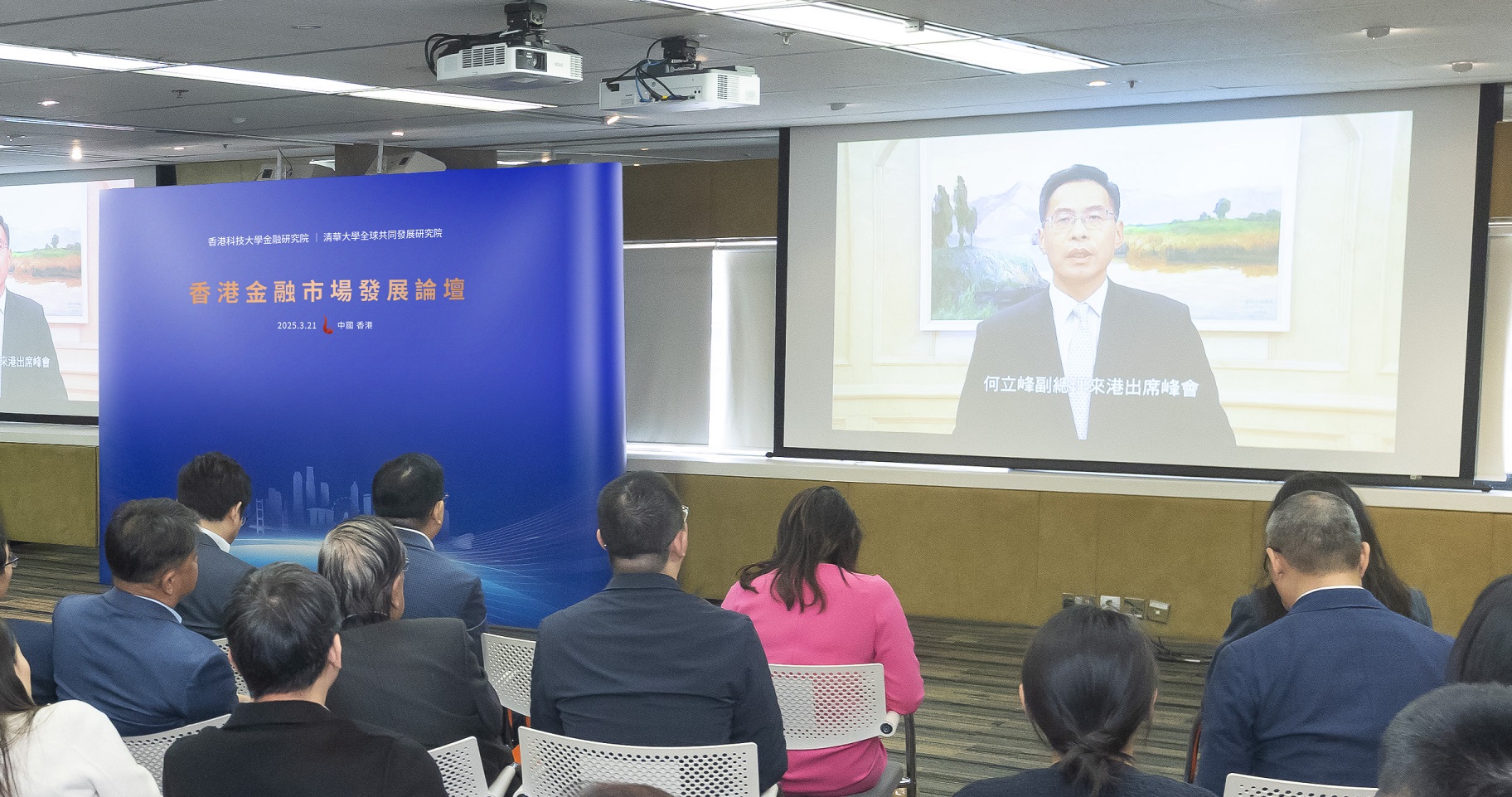
Mr. Qi Bin, Deputy Director of the Liaison Office of the Central People’s Government in the Hong Kong SAR, delivered a keynote speech at the forum.
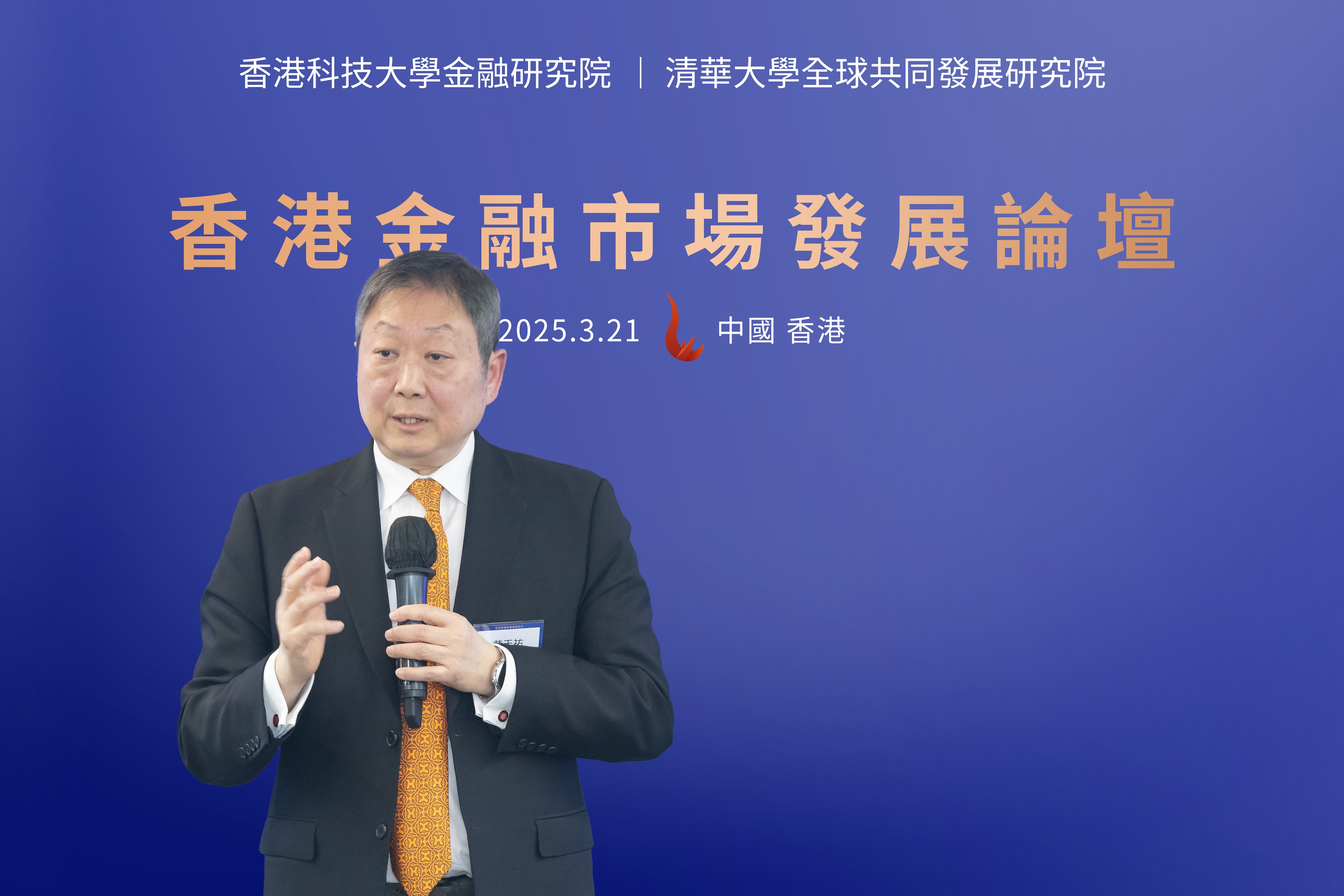 Mr. Tim Lui, Chairman of the Securities and Futures Commission, delivered a keynote speech at the forum.
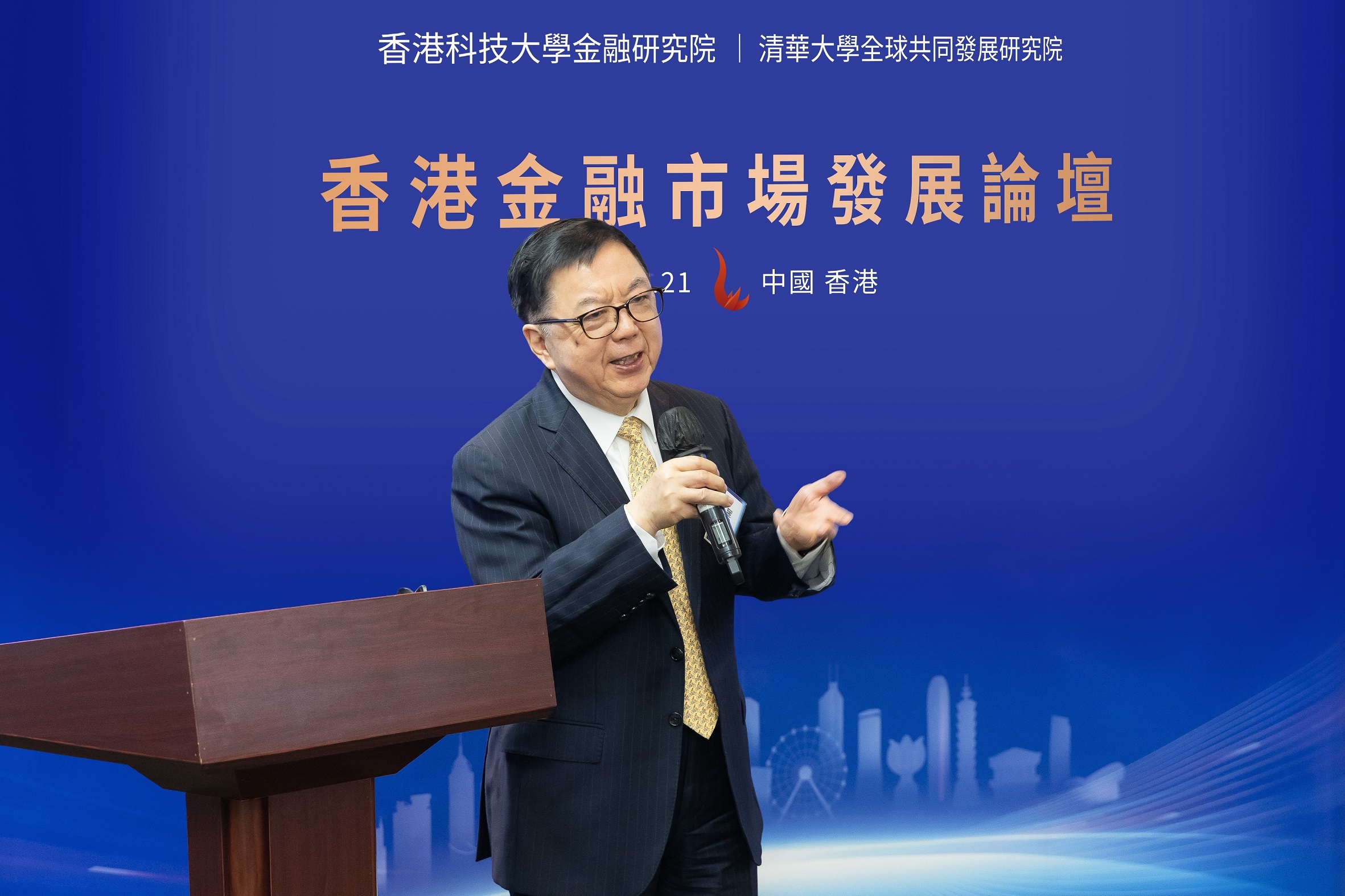 Mr. Li Jiange, Chairman of the Sun Yefang Economic Science Foundation, delivered a keynote speech at the forum.
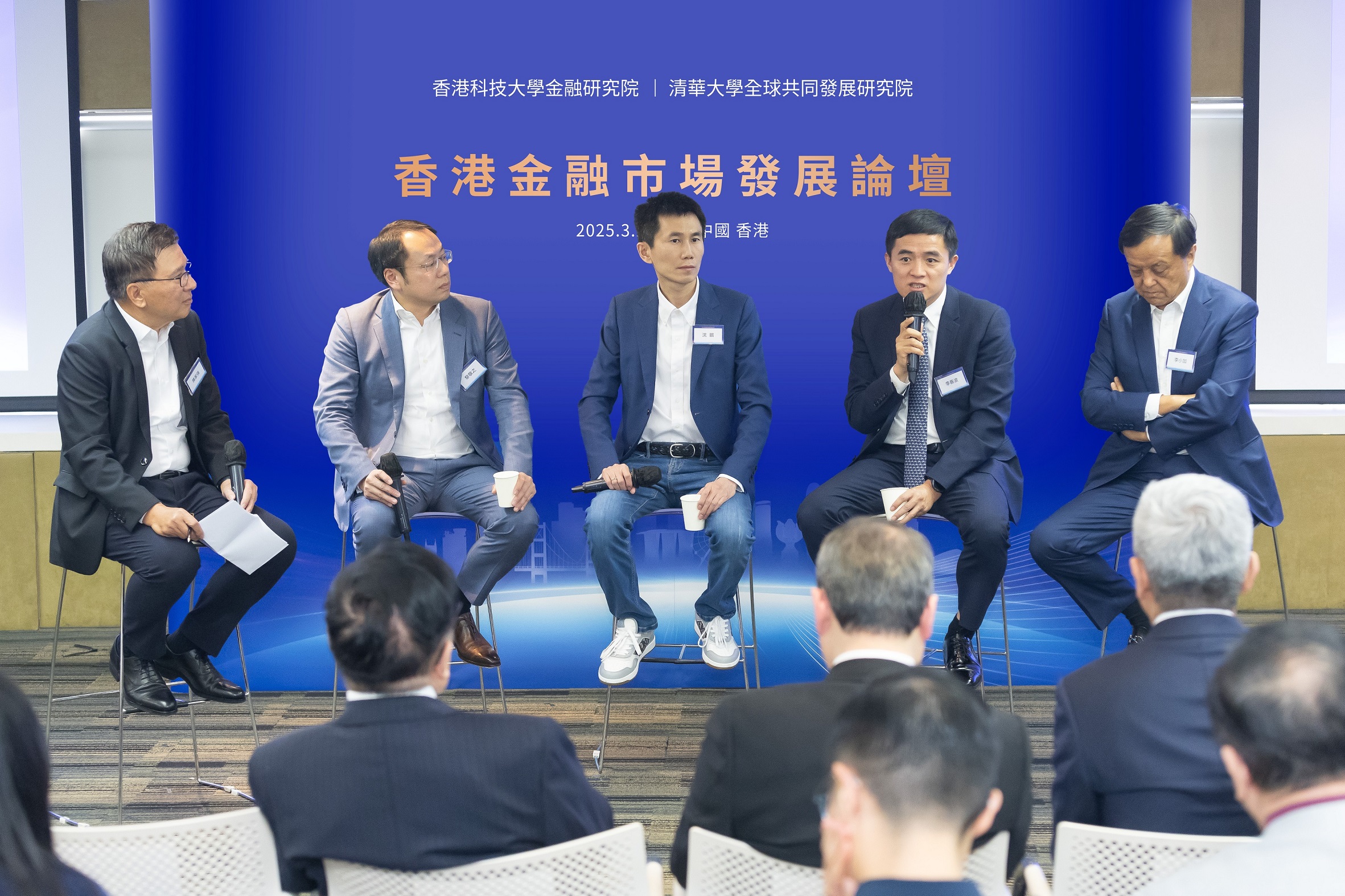 The roundtable discussion focused on attracting more high-quality enterprises to raise capital in Hong Kong. It was moderated by Professor KC Chan (far left), Chairman of WeLab Bank, former Secretary for Financial Services and the Treasury, and former Dean of HKUST Business School. Speakers included Mr. Charles Li Xiaojia (far right), Founder of Micro Connect and Chairman of Micro Connect Macao Financial Assets Exchange; Mr. Shen Peng (center), Founder of Waterdrop Inc.; Mr. Li Chunbo (second from right), Executive Committee Member of CITIC Securities and Chairman and CEO of CLSA; and Mr. Loong Chee Yeong (second from left), Chief Executive Officer of Deutsche Bank Hong Kong and Chairman of Deutsche Bank’s Asia Investment Banking Division.
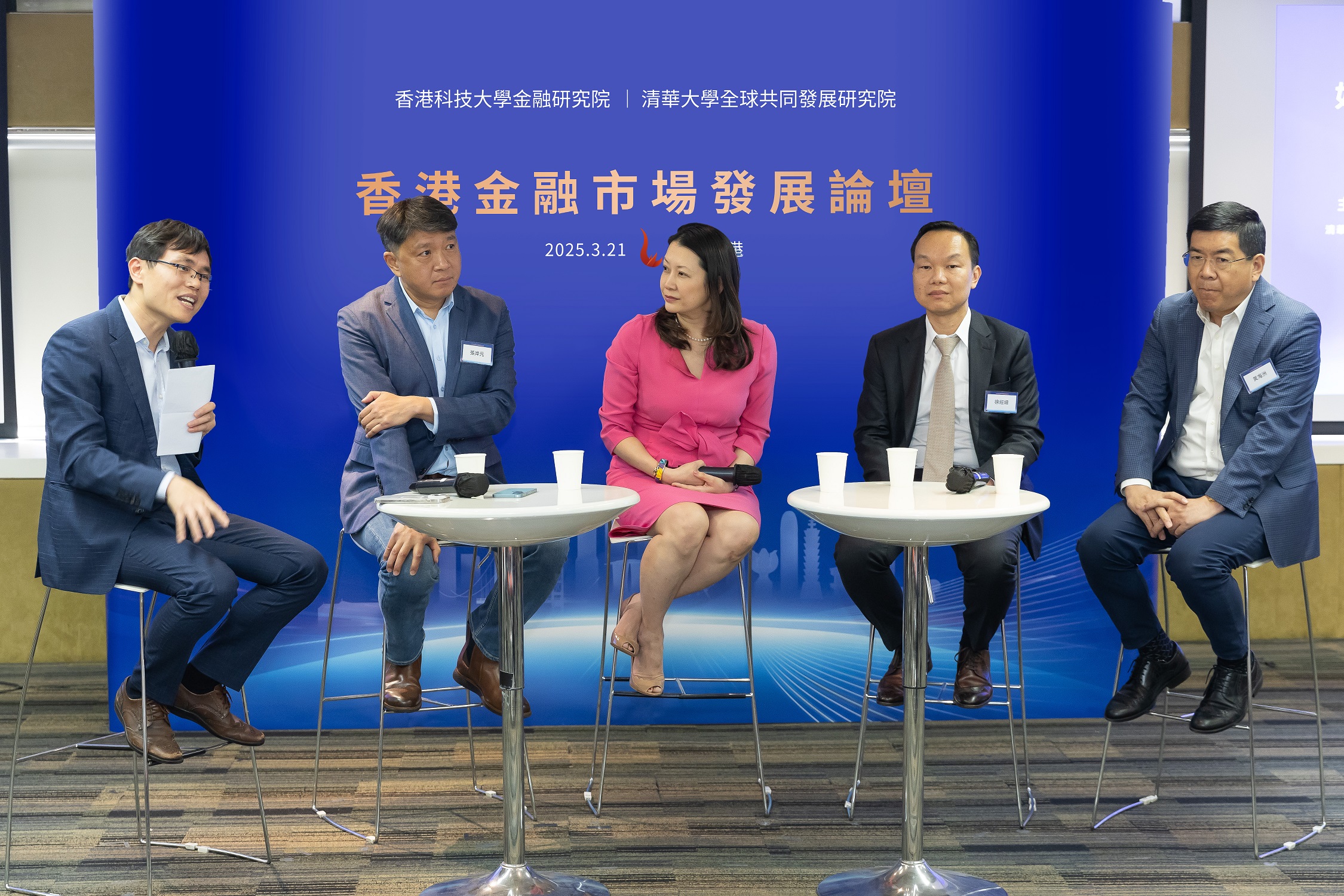 The roundtable discussion explored how to attract a more diversified group of investors to participate in Hong Kong’s financial markets. It was moderated by Professor Yu Jianfeng (far left), Chair Professor at Tsinghua PBC School of Finance and Associate Dean of the FinTech Research Institute. Speakers included Mr. Huang Haizhou (far right), Member of the Monetary Policy Committee of the People’s Bank of China and former Managing Director and Management Committee Member of CICC; Mr. Xu Jingwei (second from right), Managing Director and Head of Global Listing Services at Hong Kong Exchanges and Clearing Limited (HKEX); Ms. Joyce Chu (center), Managing Partner and Chief Investment Officer of Nan Fung Group Asset Management; and Dr. Zhang Anyuan (second from left), Chief Economist of Sequoia China.
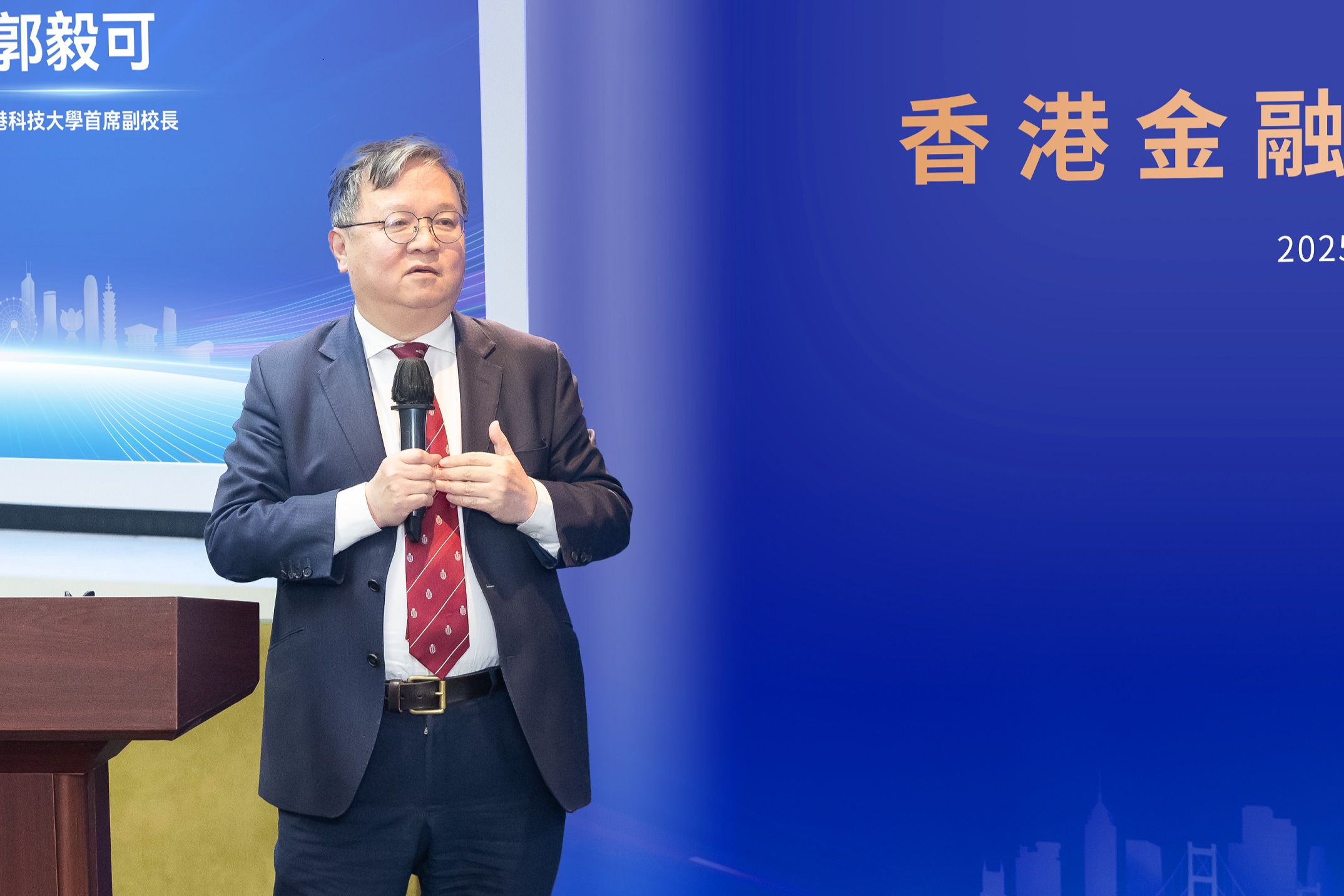 Professor Guo Yike, Provost of HKUST, delivered opening remarks at the event.
 Professor Bai Chong’en, Dean of the School of Economics and Management and Dean of the Institute for Global Common Development at Tsinghua University, delivered opening remarks at the event.
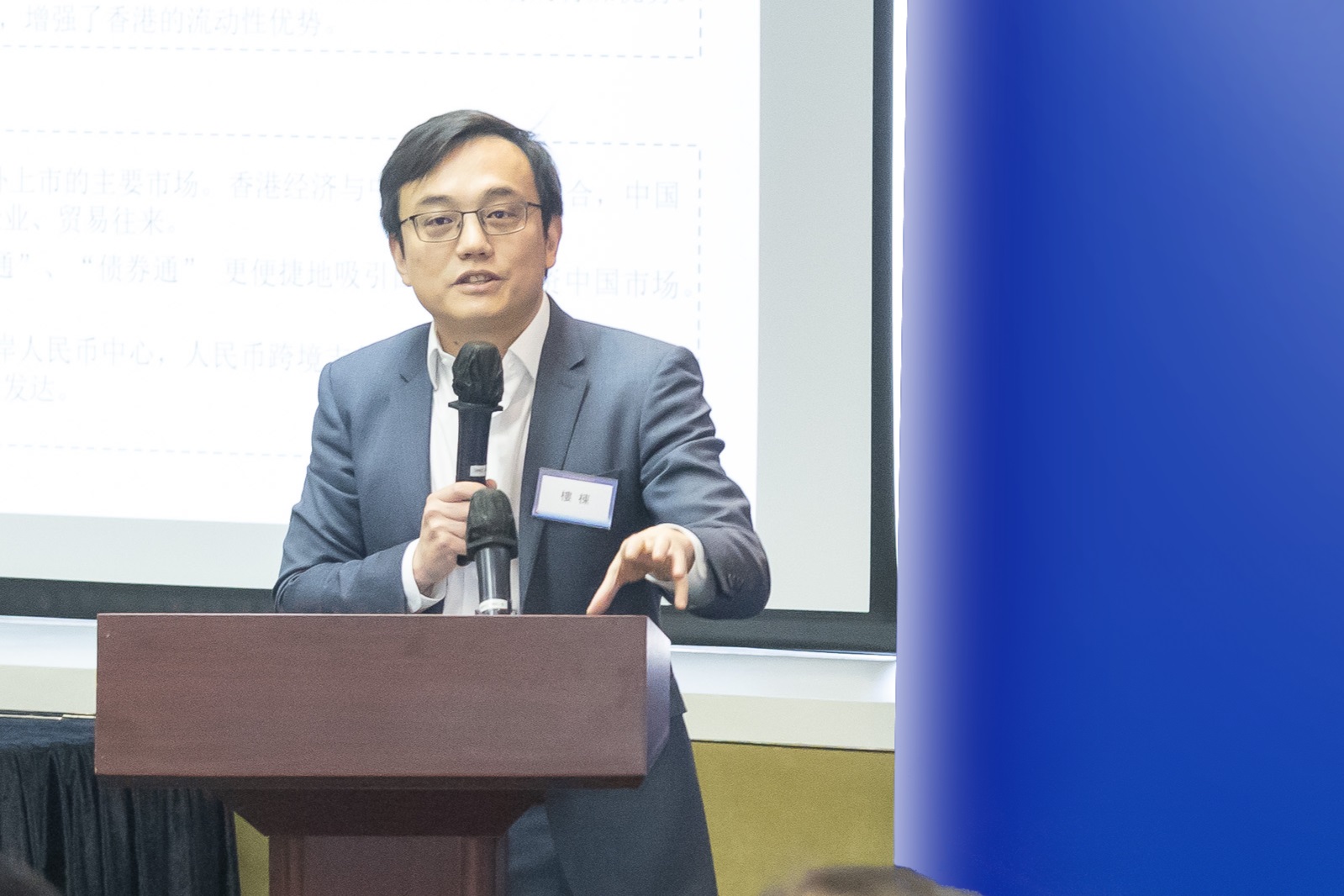
Professor Lou Dong, Dean of the HKUST Institute for Financial Research and Associate Dean of HKUST Business School, delivered opening remarks at the event.
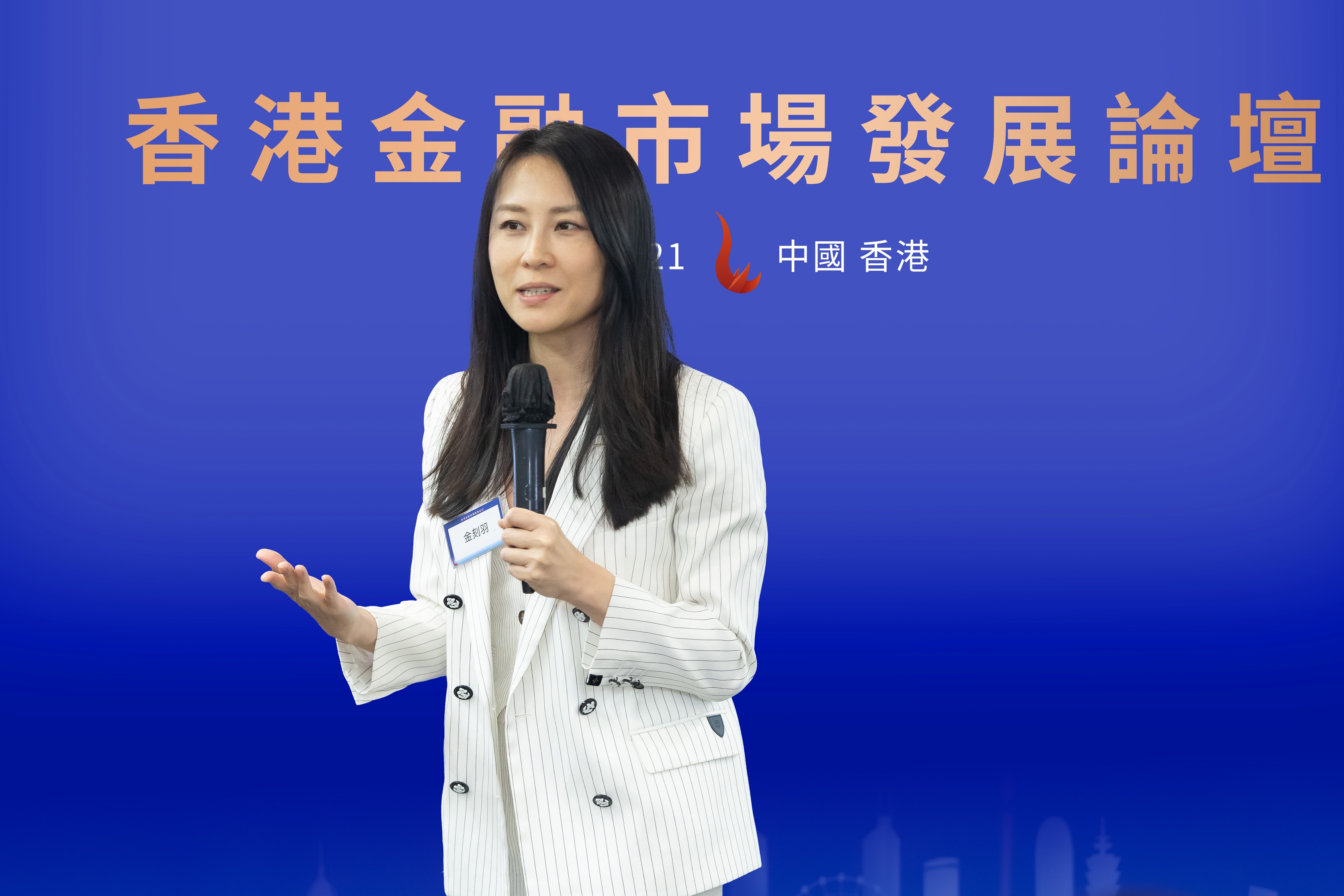
Professor Jin Keyu, Director of the Centre for Geoeconomics at the HKUST Institute for Financial Research, delivered opening remarks at the event.

